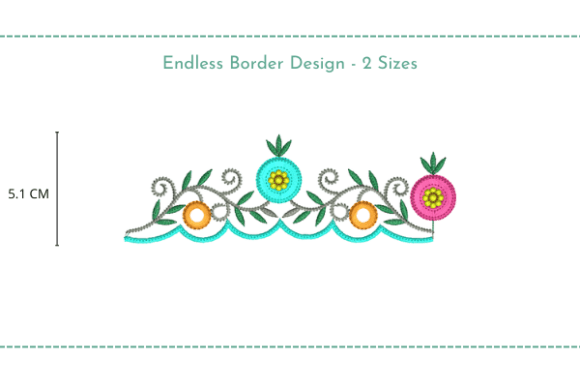
Traditional Indian Border: A Designer’s Craft Fair Review
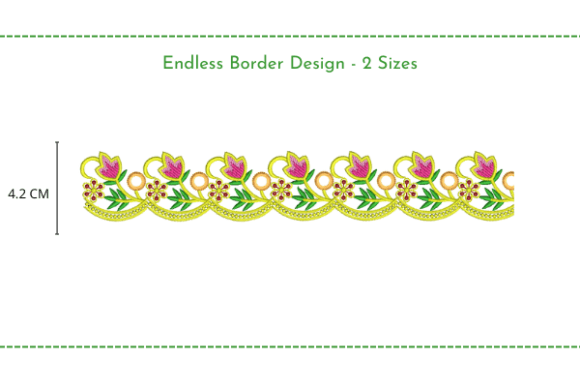
When you unpack a new machine embroidery design and immediately picture it on a dozen different craft fair product ideas, you know you’re holding something special. That’s the feeling I get with the Traditional Indian Border. It isn’t a timid accent stripe. It’s a confident, ornate, and deeply decorative border design that carries the weight of intricate cultural motifs. The first glance tells me three things: this will photograph beautifully, it will stop shoppers mid-aisle, and it will demand a little extra care during production—but the payoff is worth every minute.
First Impressions: Elegance That Stops Shoppers
The Traditional Indian Border reads as elegant, premium, and festive — not cute, not rustic, and definitely not minimal. It’s a linear motif that repeats, which is exactly what a border embroidery file should do. Whether you’re planning tea towel embroidery, apron embroidery, or embellishing a tote bag design, this design promises a rich, handcrafted look that can elevate an otherwise plain woven item into a boutique-quality handmade product. In a crowded craft fair, where tables blur together, something this ornate offers instant visual distinction. It feels like a small slice of heritage textile art, and that story sells.
Where This Border Design Shines at a Craft Fair Booth
I mentally walk through my booth setup. The design is a border, so it’s naturally linear. That means it’s perfect for framing edges, creating bands of decoration, or adding a luxurious hem detail. I’m already seeing it on linen tea towels, layered over a folded stack, drawing the eye up toward the price card. It would also work wonders on table runners, cloth napkins, and cushion covers, where the border runs along the edge and instantly transforms a simple solid fabric into a curated home decor piece.
Tote Bags and Market Bags: A Walking Showcase
For a craft fair product, nothing beats a tote bag for visibility. Shoppers carry your branding around the venue. The Traditional Indian Border stitched along the bottom edge or top opening of a canvas tote creates a high-end look that feels intentional and artisanal. I’d test it on natural cotton, jute, or even a heavier linen blend. The stitch density needs to be appropriate for the thick fabric, but the linear nature of the design means it won’t fight the garment’s structure as much as a large focal motif would. It works as a small accent that still reads as a premium detail, and that’s a smart balance for Etsy seller listings, too.
Home Decor Magic: Cushion Covers, Table Linens, and More
Home decor is where this Traditional Indian Border truly earns its keep. The description mentions table cloths, cushion covers, and bedsheets, and I couldn’t agree more. A border design running along the edge of a cushion cover turns a simple envelope closure into a statement. On a table cloth, it frames the meal beautifully. I’d also consider it for fabric pouches, where the border acts as a decorative band across the flap or base. Because the design is clearly a border, it’s easy to understand at a glance, which means shoppers won’t puzzle over it. They’ll see a finished item and think, “I want that on my sofa.”
Fashion Accents: From Aprons to Pouches
Even though the design is marketed for women’s fashion clothes and home decor, I’d be cautious about placing it on garments with complex curves or seams. Aprons, however, are a perfect canvas. A border along the hem or waistband of an apron creates a polished, boutique look without being overwhelming. Small zipper pouches and cosmetic bags also benefit from the border as a decorative band. The Traditional Indian Border gives these small shop product staples an instant upgrade, making them giftable and photo-ready for online listings. Just be mindful of small lettering or tiny details — if the design includes miniature paisley or dot work, those may lose clarity when scaled down for a patch or a narrow pouch panel.
Production Practicalities: Stitch Density, Hoop Size, and Fabric Choices
Before you stitch out a single finished product, you need to study the digital embroidery file carefully. The Traditional Indian Border likely carries intricate motifs—paisley, florals, geometric repeats—that mean dense stitch areas. High stitch density on a lightweight fabric can cause puckering or a stiff, uncomfortable hand. I always test on scrap fabric first. That’s non-negotiable. Check the hoop size required. The listing says it comes with multiple embroidery file formats, but the maximum width of the border will dictate which products you can embroider without rehooping. If it’s too wide for a standard 4x4 hoop, you’ll need a larger machine, and that affects how many you can produce in a batch.
Thread Colors and Contrast: Making the Design Pop
Inspecting the thread colors is a critical step. A traditional Indian border often uses rich golds, deep reds, and vibrant blues, but you’re not locked into that palette. I’d test a monochromatic version—white on natural linen, or gold on navy—to see how the design reads. The contrast matters enormously for dark fabric. If the motif is very fine, it may disappear on a black tea towel. On textured towels, the loops can swallow the finer details, so I’d stick to flat-weave cotton or linen for the cleanest results. The design’s elegance shines when every tiny element is crisp.
Stabilizer and Fabric Texture: The Make-or-Break Details
For any machine embroidery design with this level of detail, stabilizer choice is everything. I’d use a cut-away stabilizer on knits or loosely woven fabrics, and a tear-away on sturdier cottons. The fabric texture will either elevate or degrade the design. For a tea towel embroidery project, a smooth, tight-weave cotton shows off the border’s intricacy. A waffle weave or terry cloth will fight it. I’d also avoid curved cap surfaces entirely—the border is linear and would distort on a baseball cap’s dome. Embroidered patches can work, but only if the border is scaled correctly and the patch edge is finished cleanly.
Photography and Etsy Listings: How to Capture the Intricacy
When you’re an Etsy seller, the first photo sells the product. The Traditional Indian Border photographs exceptionally well if you use natural light and a close-up that shows the stitch texture. I’d create at least one printable mockup using the design in a lifestyle setting—a folded linen napkin, a pillow on a sunlit chair, a tote against a white wall. The border’s repetition draws the eye across the image, which keeps viewers engaged longer. That’s a subtle but powerful advantage for your shop’s click-through rate. Pair it with a simple, minimal product; the design does the heavy lifting.
Batch Production and Repeatability: Is It Worth the Time?
Selling at a craft fair means you need to produce multiples, often in a short time. The Traditional Indian Border is a linear design, so it’s often highly repeatable once you nail the placement. You can hoop multiple tea towels in succession, running the same file. The stitch-out time will depend on the stitch density and length, so I’d time it carefully. If it takes 20 minutes per piece, you can plan your inventory accordingly. The design is easy to understand at a glance, so there’s no rework from confused customers. It feels repeatable, which is a huge plus for a commercial embroidery or small shop product line.
Final Designer Notes: Test, License, and Launch
Before you commit to a full production run, do the smart thing. Test the design on scrap fabric with the exact thread colors you’ll use. Check thread contrast against both light and dark backgrounds. Review spacing; if the border is meant to repeat, make sure the alignment is seamless. Confirm hoop size and file formats—the product description says it comes with multiple embroidery file types, but verify exactly which ones are included before you download. Inspect stitch density for any overly dense areas that could cause thread breaks or needle issues. Use the right stabilizer for your chosen fabric. Create at least one real mockup, not just a digital preview, so you can see how the finished product handles and washes. Compare fabric colors — the design’s impact shifts dramatically between a neutral linen and a vibrant silk. Most importantly, confirm commercial licensing before selling finished items. The product description doesn’t spell out the license terms, so reach out to the designer or check the shop’s policies. You don’t want to build a product line around a digital embroidery file you’re not legally allowed to sell.
The Traditional Indian Border is one of those design assets that can anchor a whole collection. It’s elegant, highly decorative, and makes any handmade product look more expensive. For a weekend craft fair booth, it gives you a cohesive visual thread—literally—tying your table display together. When a shopper picks up an embroidered tea towel, a tote, and a cushion cover, and they all share this border, the brand feels intentional. That’s how you build a loyal customer base and turn a border into a bestselling signature.